
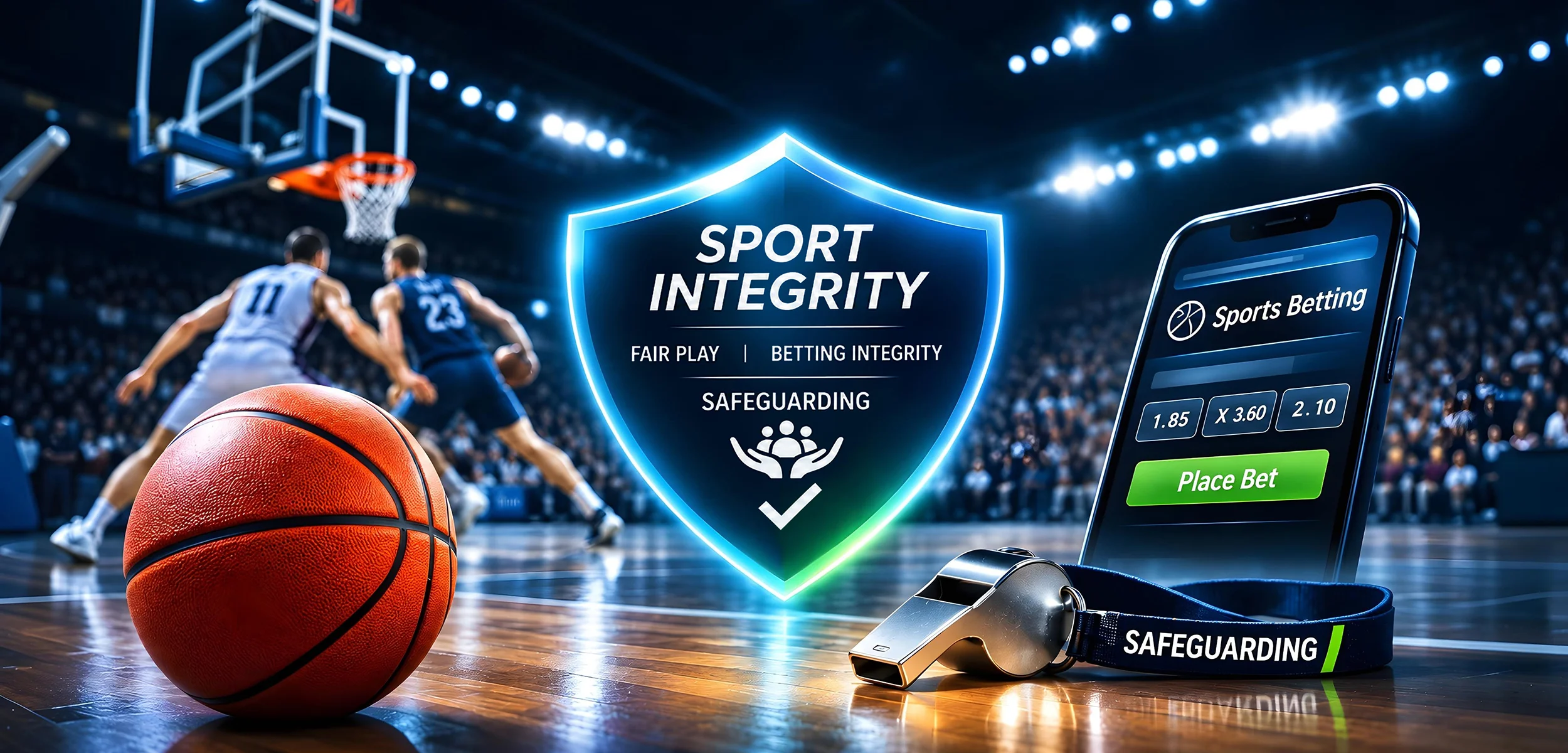
Match-fixing, betting-related abuse, corruption and opaque governance structures all threaten the credibility of sport. The Sport Integrity Global Alliance’s (SIGA) international initiative this November highlights that safeguarding sport integrity is not only an ethical matter, but also a question of leadership, economics and sustainability.
In November 2026, the Sport Integrity Global Alliance is holding its international awareness campaign, Sport Integrity Action Month, for the second time. The initiative encourages sports organisations, sports leaders, athletes, business stakeholders and professional institutions to engage in joint reflection and take concrete action.
One of the campaign’s flagship features is the “4 Questions 4 Leaders” series, in which four international experts answer four questions to assess the current state of sport integrity and its most pressing challenges worldwide.
In connection with this international initiative, the Hungarian Sport Business Association (MASÜSZ) also asked one of its own members, Dr Norbert Rubicsek, Director of the CSCF Sport Integrity Group and an international sport integrity expert, about the situation in Hungary and the main professional challenges.
The questions focus on the transparent and responsible operation of sports organisations, the relationship between sport integrity and sustainable governance, and the prevention of match-fixing, betting-related abuse and corruption. Another key question is how international experience and best practice can be applied to the everyday operations of Hungarian sport.
International challenges: responsible governance, sports betting and corruption
One of the defining issues in sport integrity is responsible and transparent governance, which is a fundamental precondition for the credible and sustainable operation of sports organisations. Susana Feitor, former Olympian and Portuguese sports leader, pointed out that codes of ethics alone are not enough: consistent leadership accountability, effective oversight and transparent decision-making are essential.
At international level, betting-related abuse, match-fixing and organised crime remain major risks. Donna Goldsworthy, Vice-Chair of SIGA’s Ethics Committee, and Francisco Melo, the organisation’s Young Ambassador, drew attention to the risks of betting markets and the vulnerability of smaller leagues, while Tiago Horta Barbosa, an expert at Genius Sports, highlighted the dangers of money laundering and organised crime. According to the experts, strengthening prevention and international cooperation is essential to preserving the integrity of sport.
Sport integrity is also an economic asset
The credibility of sport can now directly influence how sports organisations are perceived commercially, shaping their sponsorship relationships and long-term sustainability. For sponsors and business partners, transparent operations, ethical leadership and reputational risk management are becoming increasingly important. Integrity is therefore not only about preventing abuse, but also about preserving the economic and social value of sport.
A Hungarian expert’s perspective: sport integrity as the foundation of trust
In connection with the international initiative, the Hungarian Sport Business Association (MASÜSZ) also asked its member Dr Norbert Rubicsek, Director of the CSCF Sport Integrity Group, what sport integrity means in Hungarian practice, what responsibilities sports organisations bear, and what the most important challenges facing Hungarian sport are in this field. A former Europol expert, he has extensive international experience in combating sport corruption, match-fixing and betting-related abuse, as well as in matters of sport integrity and responsible governance.
According to the expert, integrity means far more than compliance with the rules: it is about preserving trust in sport. This trust forms the foundation of the relationship between sports organisations and athletes, parents, fans and sponsors.
“Leaders don’t just make decisions, they create culture,” emphasises Dr Norbert Rubicsek. In his view, responsible sports governance is built on transparent operations, a safe sporting environment and an organisational culture in which ethical principles become part of everyday practice.
He regards organisational development as one of the key tasks facing Hungarian sport. While considerable attention is paid to the professional training of athletes, it is equally important to develop the environment in which they train, compete and grow. According to the expert, preserving trust will be the greatest challenge of the coming years, resting on three key pillars: transparency, credibility and sustainable operation.
SportESG360 Hungary® – integrity and sustainability
These international efforts also connect to the Hungarian Sport Business Association’s SportESG360 Hungary® programme, which addresses the environmental, social and governance aspects of sustainability within a single, integrated framework.
In this model, integrity, transparency, athlete protection and responsible leadership all play a defining role. The aim is to promote a way of operating for sports organisations that is not only successful, but also financially stable, socially responsible and sustainable over the long term.
Credibility is the foundation of sport’s future
One of SIGA’s key messages, which the Hungarian Sport Business Association also represents, is that sport integrity is an ongoing leadership and organisational responsibility. International experience offers valuable guidance for Hungarian sport in developing transparent governance, prevention, oversight and responsible operations.
In MASÜSZ’s approach, the long-term success of sport rests not only on sporting and financial performance, but also on credible, ethical and socially responsible operation of sports organisations.
Sport integrity, responsible governance and sustainable organisational operation are also among the key topics of the IV. MASÜSZ SportUp professional conference, to be held on 24 November 2026 at the Hungarian House of Sports. Built around the SportESG360 Hungary® approach, the event brings together Hungarian experts and sports leaders to explore how Hungarian sport can become more transparent, more responsible and more sustainable in the long run.
Sources: SIGA – 4 Questions 4 Leaders, Sport Integrity Action Month 2026; CSCF Sport Integrity Group.